
Originally posted on Multiple Sclerosis News Today
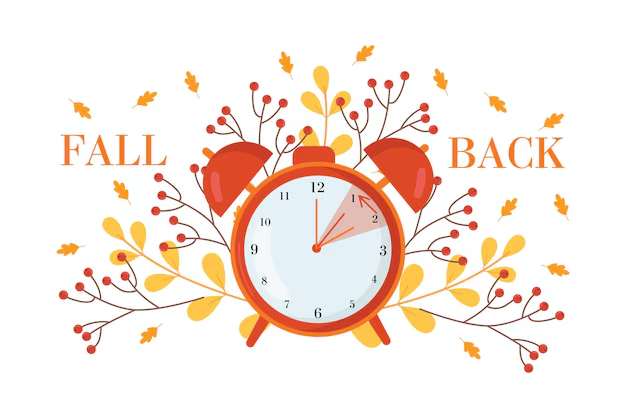
On Sunday, Nov. 2, daylight saving time ended, our clocks “falling back” an hour. This time of year is difficult for many because the sun sets earlier and the evenings are darker. This can contribute to seasonal depression for a lot of people. However, I experience the opposite.
Long before I was diagnosed with relapsing-remitting multiple sclerosis (MS) in 2017, I loved the darkness. Something about it feels so cozy, especially when I’m at home with soft lighting on. It’s also a reminder that cooler weather is on the way, which makes me jump with joy, given that my MS symptoms are exacerbated by heat.
I have dealt with MS heat intolerance for years, and I dread the summer months. Here in central Texas, the heat stays for much longer than it’s welcome. So when daylight saving time ends, I feel like I can breathe again. Now that it gets dark earlier, doing simple tasks in the evenings — throwing out trash, walking to and from my car, going to the grocery store, taking casual walks — is a lot less daunting for me.
The earlier sunset also makes me feel less guilty about getting in bed at 6 p.m. As I’ve mentioned in previous columns, chronic fatigue hits me like an 18-wheeler almost every day, resulting in full-body aches, especially in my joints. It makes me feel like I just ran a marathon.
I love spending my free time in bed or on my couch to let my body rest and recuperate, but this isn’t always as peaceful as it sounds because I feel like I have to keep busy at all times. I struggle to sit still, especially when the sun is still out.
But when we turn back our clocks and it starts getting dark around 5:30 p.m., I don’t feel as guilty getting ready for bed at an earlier hour. In my head, the darkness signals bedtime. During the fall and winter months, I am better able to grant my body the rest that it needs.