

Originally posted on Multiple Sclerosis News Today
Before I was diagnosed with relapsing-remitting multiple sclerosis at age 17, I was just a young adolescent eager to attend college but uncertain about my path. However, after my diagnosis, which happened during my senior year of high school, just a couple months before college applications were due, I knew exactly what I wanted to pursue.
My goal was to work toward a degree in prehealth neuroscience at the University of Texas at Austin to advance into medical school. I wanted to understand multiple sclerosis (MS) from a scientific standpoint since I had firsthand experience with the patient’s perspective. I also loved all things science.
Upon entering UT Austin as a freshman, my class schedule was loaded with science, which I was excited about. But I soon realized that prehealth neuroscience was no joke. After two semesters, I decided that medical school wasn’t in the cards for me due to the heavy memorization that was required. I struggled with it due to MS cognitive dysfunction.
Next, I decided I wanted to go to pharmacy school because of all the medications I was taking. But while I was interested in learning the science behind various drugs, pursuing pharmacy school wasn’t something I truly wanted.
According to the university, I was still on the prehealth neuroscience track, but I wasn’t flourishing like my peers. I failed my genetics and general chemistry courses three times and couldn’t continue to the advanced neuroscience classes. At that point, I was the stereotypical college student who had no idea why I was in college or what I wanted to do with my life, which made me feel lost and confused.
Finding my calling
To explore other potential paths, I enrolled in a class in the Department of Human Development and Family Sciences. In short, this class focused on the study of human development in different contexts, such as familial, societal, and relationships. I immediately knew it was the path I wanted to pursue because of the humanity aspect of the field and my desire to help people with disabilities and chronic illnesses.
After this realization, I set up a meeting with a former graduate student mentor to pick their brain about their decision to attend graduate school instead of medical school. Due to my lack of memory, I don’t remember the specifics of the conversation, but I do remember being heavily swayed to research more about graduate school. After that, things started to fall into place.
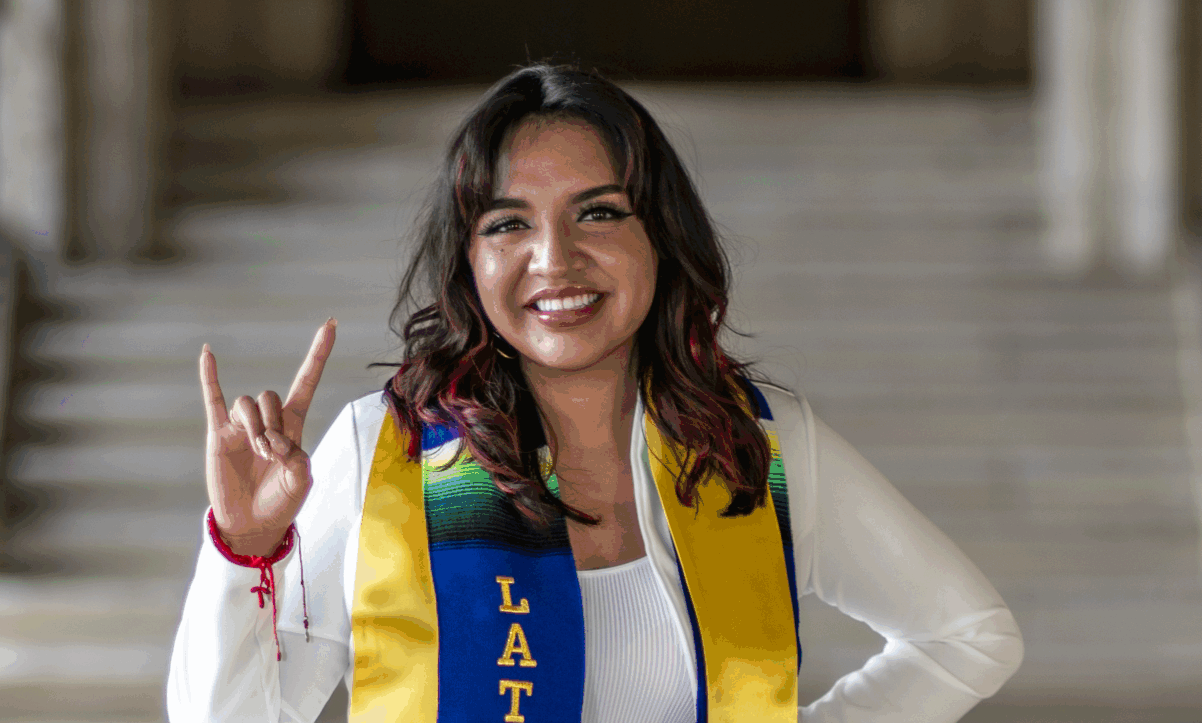
During my last semester of undergraduate studies, I enrolled in a class called “The Culture of Disability in Education” with Stephanie Cawthon. Soon after, I began working with her on a Microsoft-funded project on accessibility and inclusion for disabled students in higher education. It was around that time that I stumbled upon a doctorate program at UT Austin in human development, culture, and learning sciences. To my surprise, Cawthon was the graduate chair of the program, which gave me insight into the work of different faculty members.
Being accepted into this program has deepened my knowledge of and passion for better supporting people with disabilities and chronic illnesses. My MS diagnosis has set up a relay of decisions and has shaped my current educational and career path, and for that I am grateful.